
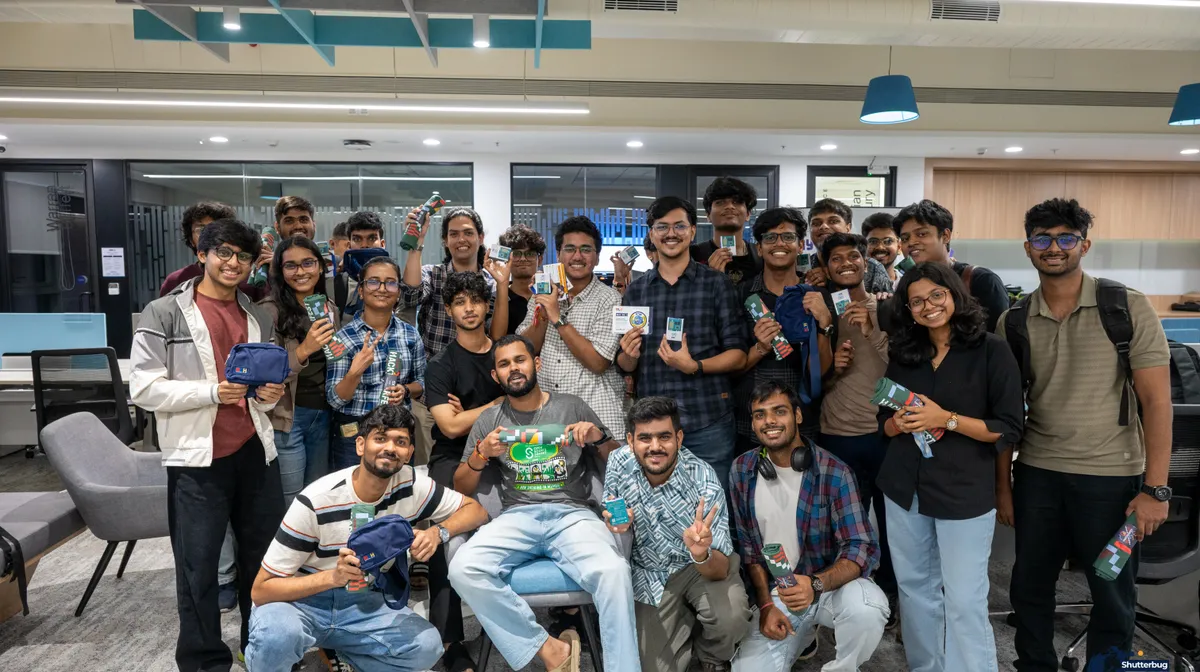
Hacktoberfest Hack Day Mumbai 2026: Building in Public, One Checkpoint at a Time
Most technology events are measured by the number of talks delivered.
Hacktoberfest Hack Day Mumbai was measured by progress.
Every thirty minutes, participants shared what they had built, what they had learned, and what they planned to tackle next.
By the end of the day, those updates had evolved into 18 project submissions, hundreds of community conversations, recruitment opportunities, and a room full of builders that simply refused to stop hacking.
On 17 October 2026, builders from across Mumbai gathered for Hacktoberfest Hack Day Mumbai, a community-driven Open Source and AI buildathon organized by Hackerspace Mumbai and hosted by our ecosystem partner Paytm at its Waterstones Corporate Park office.
This was not a conference.
There were no keynote sessions.
No panel discussions.
No sponsor presentations consuming half the agenda.
We kept the introduction short, explained the rules, distributed the challenges, and got out of the way.
The day belonged to the builders.
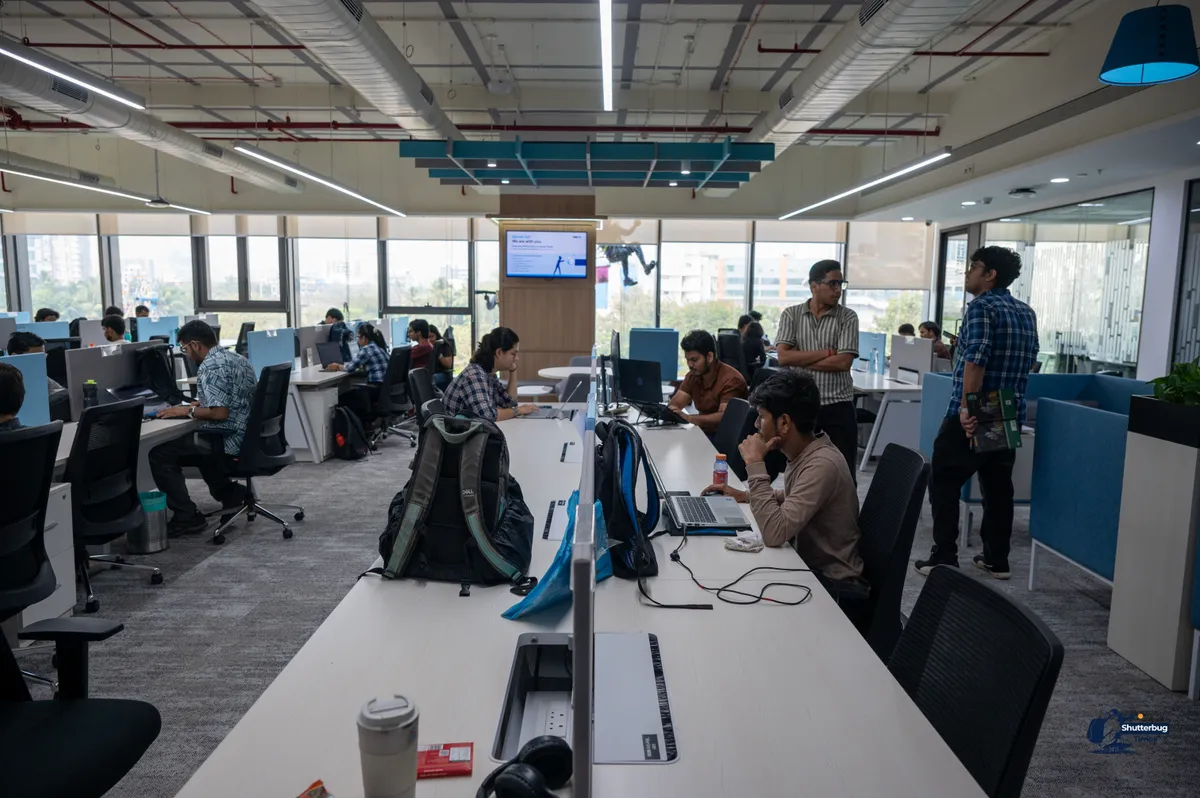
From 500+ Registrations to a Room Full of Builders
Long before Hack Day began, it became clear that community interest had exceeded our expectations.
More than 500 registrations poured in alongside a steady stream of questions, emails, comments, messages, and requests for clarification.
- Who would be approved?
- Could participants work solo?
- How did project submissions work?
- What was the relationship between Luma approvals and MLH registration?
- How would judging be conducted?
- What qualified for swag?
The challenge was not simply running the event.
The challenge was curating it.
Hack Day was designed as a focused, builder-first experience, so applications were carefully reviewed to ensure a balance of first-time contributors, experienced developers, students, maintainers, and AI enthusiasts.
That effort paid off.
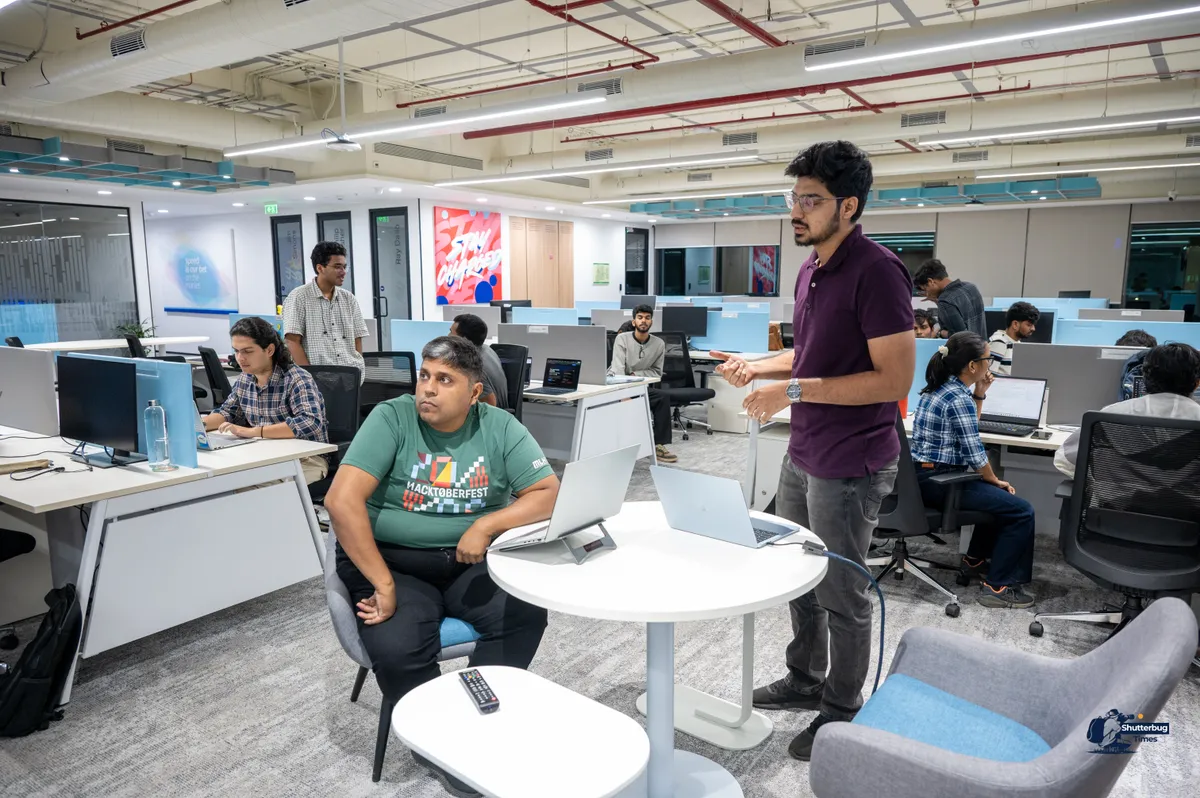
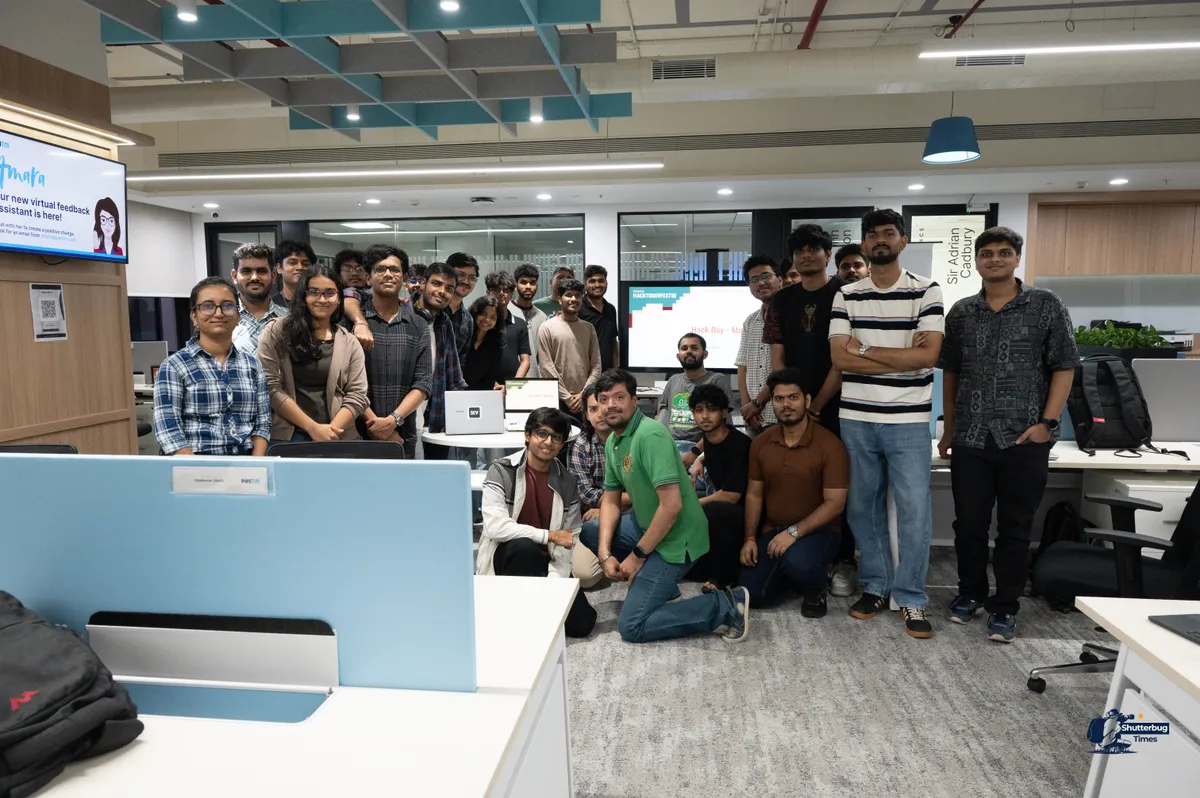
When the day finally arrived, the room was not filled with spectators.
It was filled with builders.
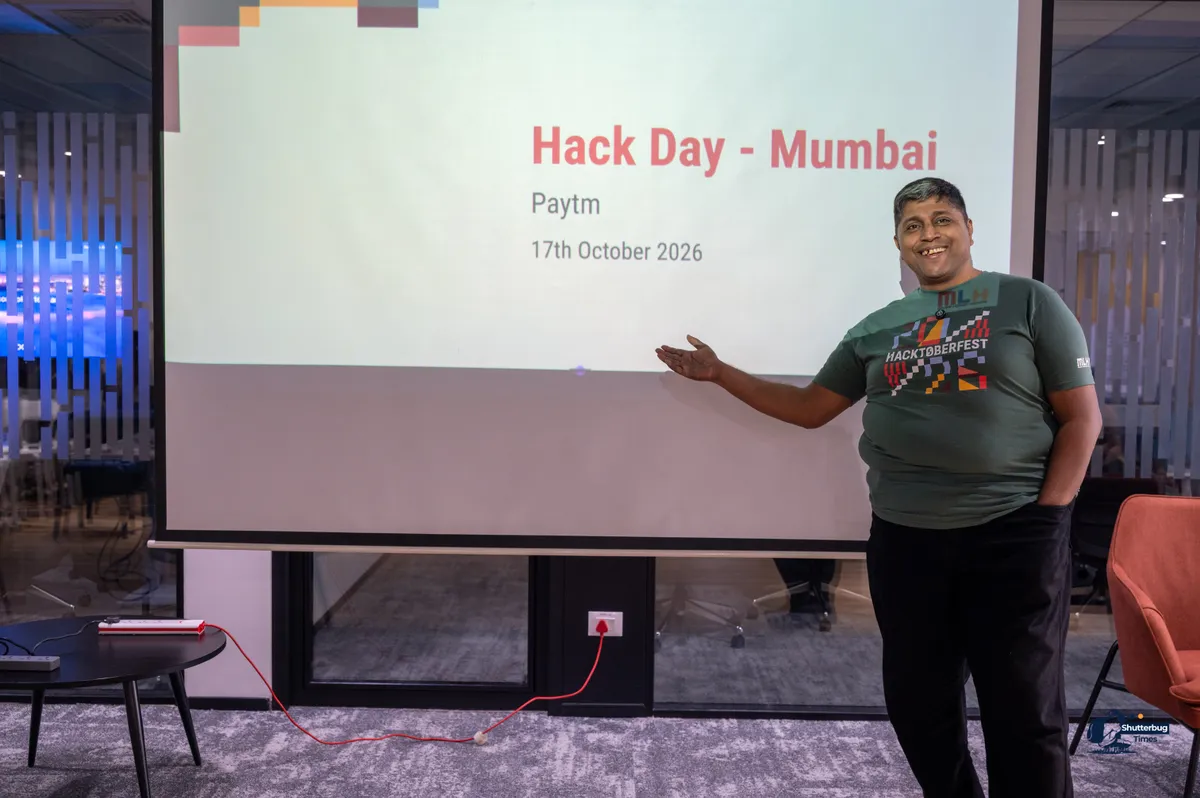
Building in Public
One challenge with any hackathon is ensuring that projects are genuinely built during the event itself.
We wanted participants to share their journey, not just their final demo.
To make that happen, we introduced progress checkpoints every 30 minutes.
Throughout the afternoon, builders shared updates about:
- What they were building
- What they had completed
- What challenges they were facing
- What they planned to work on next
Those updates were shared publicly through the event’s LinkedIn event page and Hackerspace Mumbai’s live event thread on X, creating a visible and verifiable timeline of every project’s evolution.
Anyone following along could watch projects evolve throughout the day, from initial ideas and rough sketches to working prototypes, demos, and final submissions.
The checkpoint system proved to be one of the day’s most successful experiments.
It encouraged accountability.
It encouraged collaboration.
It helped participants discover others building similar things.
It also allowed organizers, judges, and community members to observe not just the final result, but the journey that produced it.
Most importantly, it provided a transparent record showing how ideas transformed into working software.
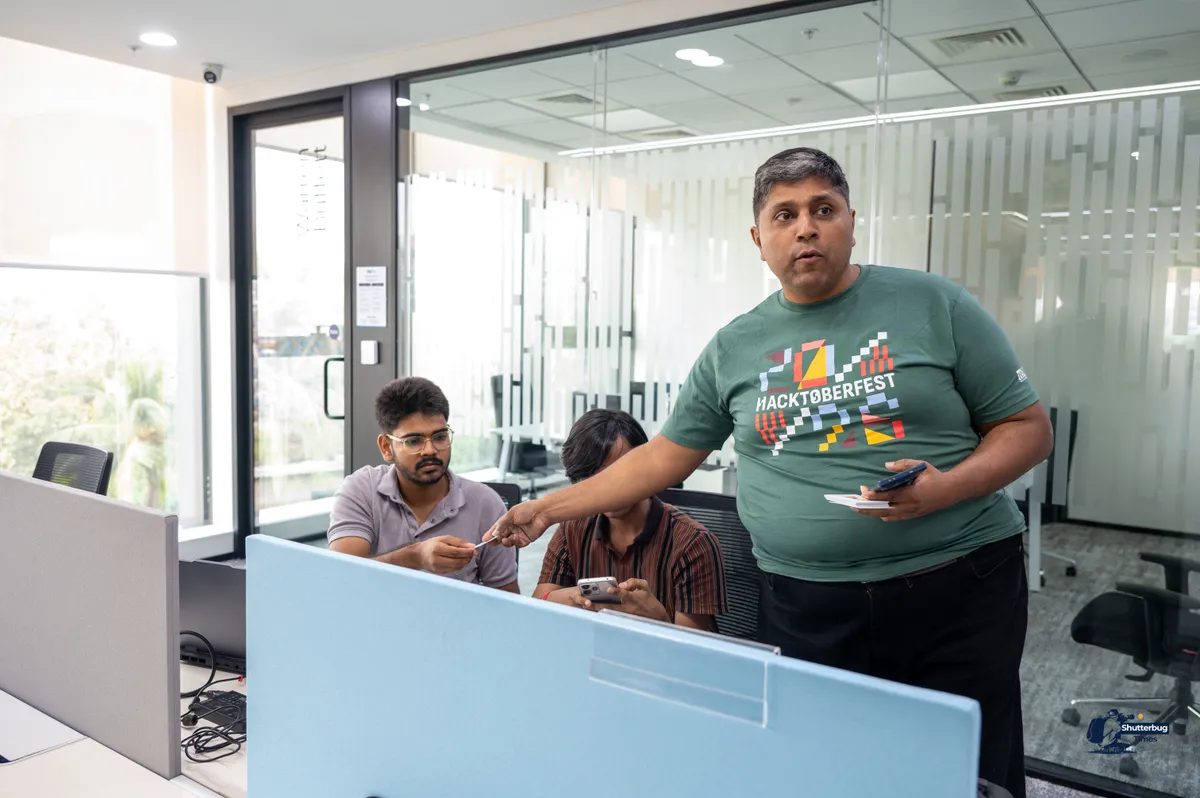
The stickers and participation rewards were not simply handed out for showing up.
They were earned by building.
Everyone Was Building, Including the Organizer 😅
A funny thing happened while preparing for Hack Day.
After reviewing more than 500 registrations and answering the same questions across Luma, LinkedIn, email, social media, and community channels, I realized I was spending nearly as much time answering attendee questions as organizing the event itself.
The obvious solution?
Build the thing every organizer dreams about after answering the same question for the fiftieth time.
Inspired by Hacktoberfest’s AI theme, I started building HackBuddy, an open-source AI event concierge designed to answer common attendee questions and reduce organizer overhead.
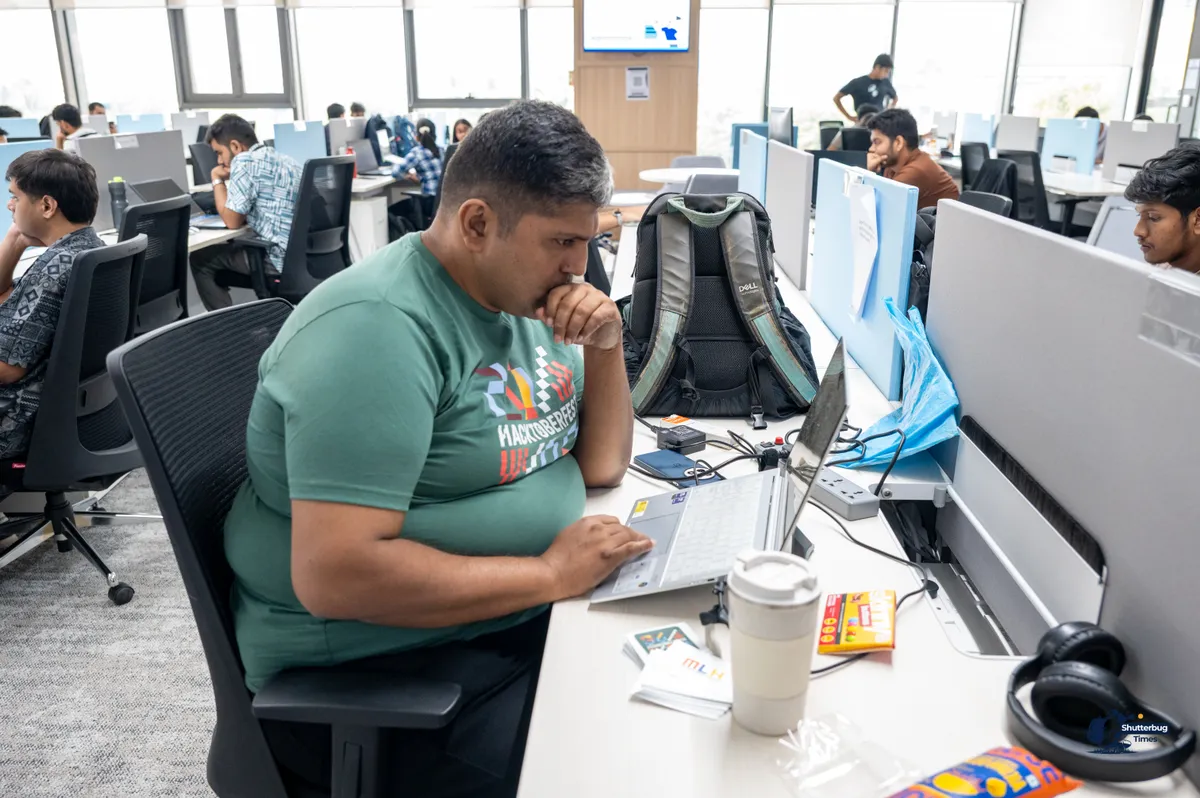
Of course, in true hackathon fashion, I only managed to start coding it during Hack Day itself, which meant it was completely unavailable for the event it was originally supposed to help with.
So while participants were building hackathon projects, I was quietly building one of my own.
👉 Read how HackBuddy was born from 500+ hackathon registrations
Sometimes the best way to solve an organizer problem is exactly the same advice we give participants:
Build something.
18 Projects. One Afternoon.
By the end of the day, participants had submitted 18 projects across a remarkably diverse range of ideas.
- Open-source AI
- Local AI inference
- AI agents
- Developer tooling
- Security solutions
- Productivity workflows
- Accessibility challenges
- Documentation automation
- Repository maintenance
What stood out was not just the technology.
It was the practicality.
Participants consistently gravitated toward real-world problems and used Open Source AI to build solutions that could continue evolving long after the event ended.
Eventually, hacking gave way to demos.
Demos gave way to judging.
And the judges were left with a difficult problem of their own:
Picking winners.
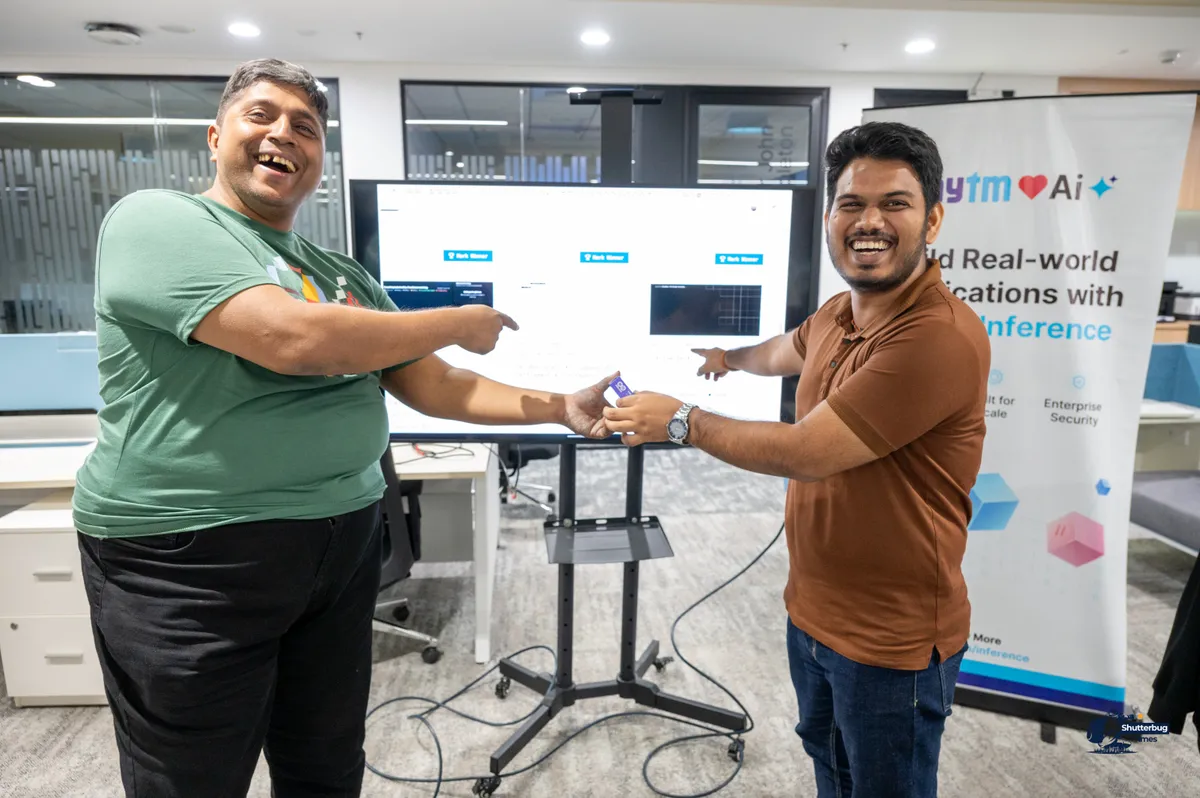
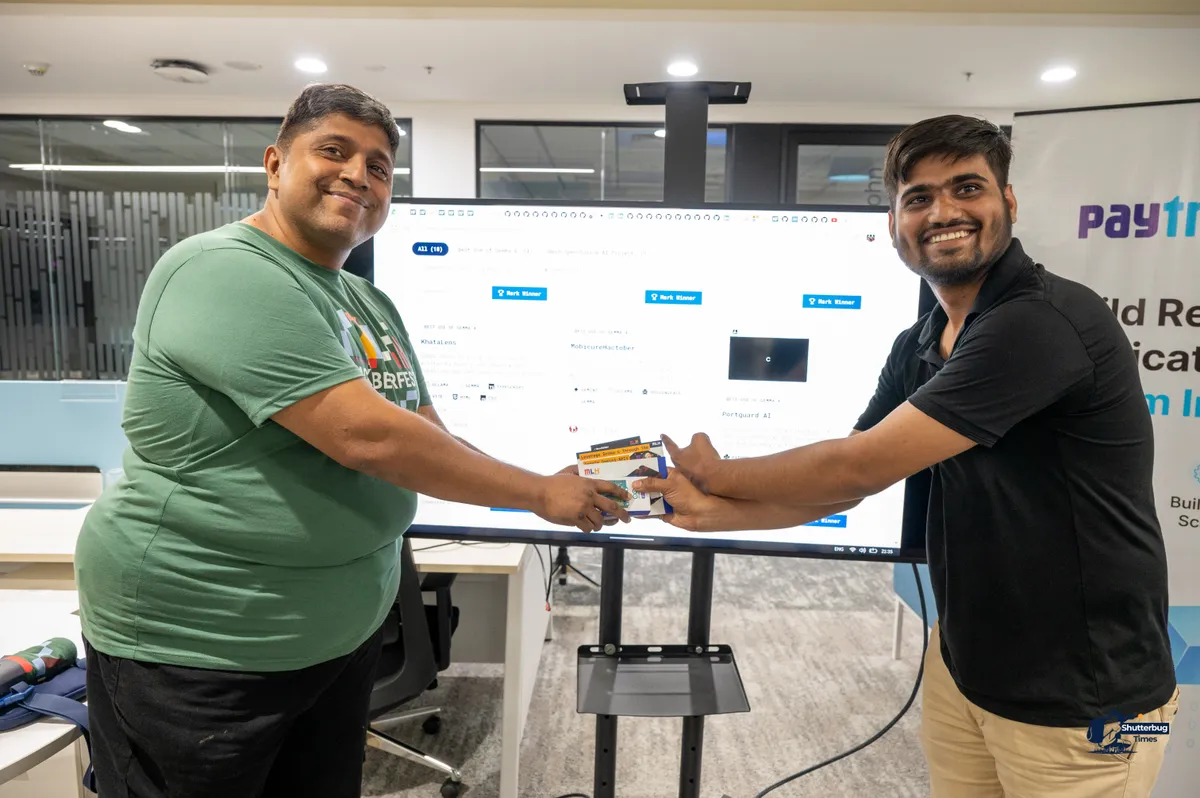
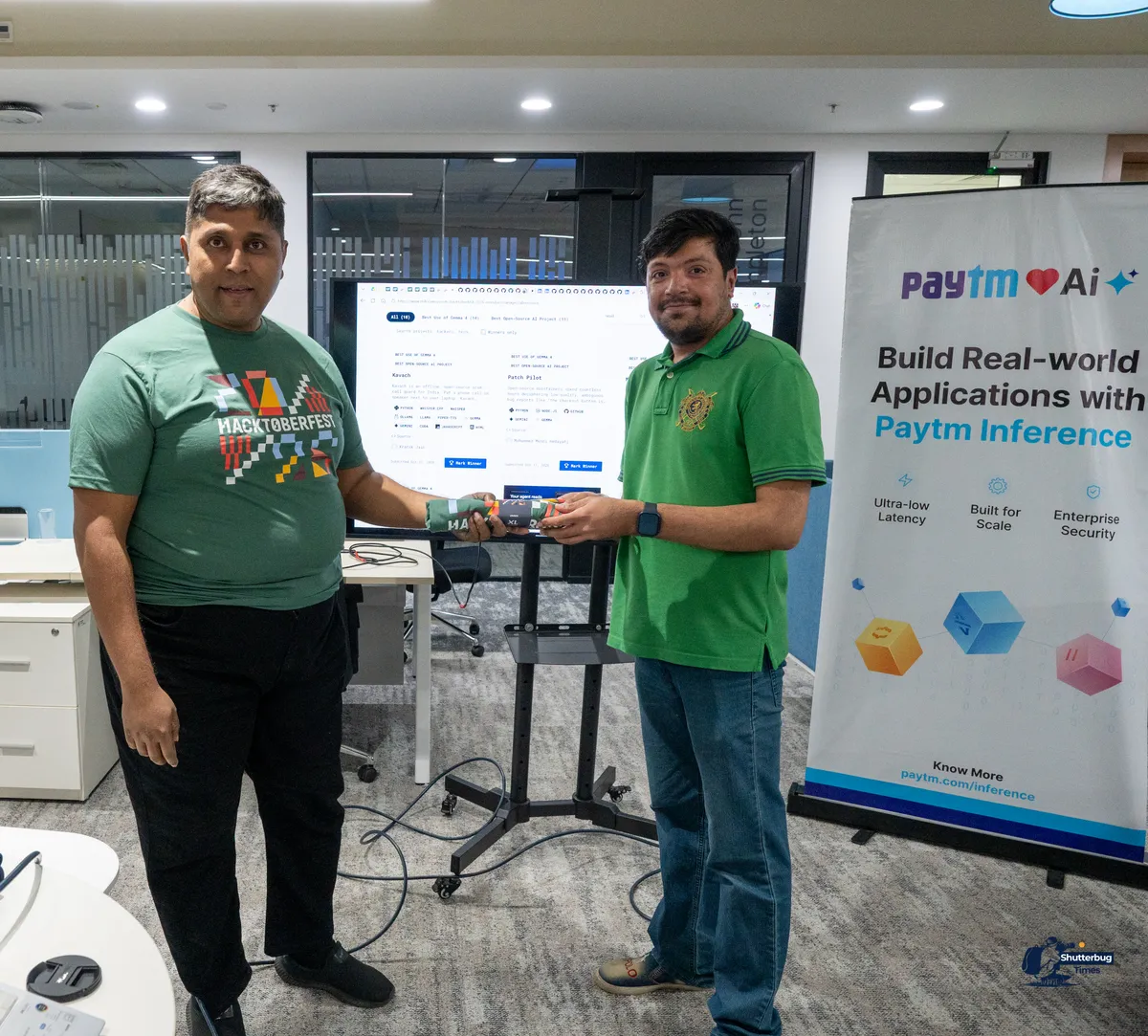
🏆 Overall Winner: Kavach
Selecting winners proved surprisingly difficult.
Projects were evaluated on real-world impact, technical execution, innovation, effective use of Open Source AI, and the ability to demonstrate meaningful progress throughout the day.
Among the 18 submissions, one project consistently stood out.
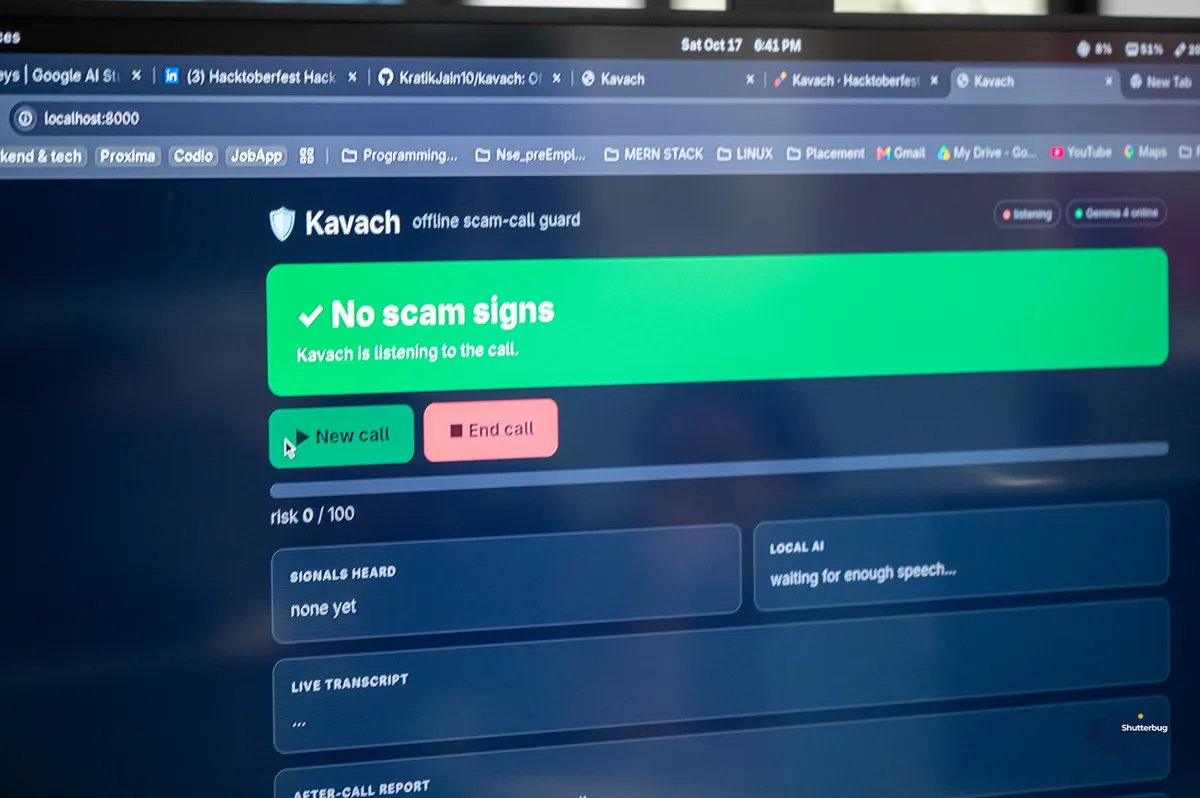
Built by Kratik Jain, Kavach is an open-source offline scam-call guard designed to help identify potentially fraudulent calls using local AI.
Rather than relying on cloud processing, Kavach analyzes conversations locally, helping users understand potential risks while maintaining privacy.
Almost everyone has experienced scam calls.
Almost everyone knows someone affected by them.
That made Kavach immediately relatable while showcasing a thoughtful technical implementation.
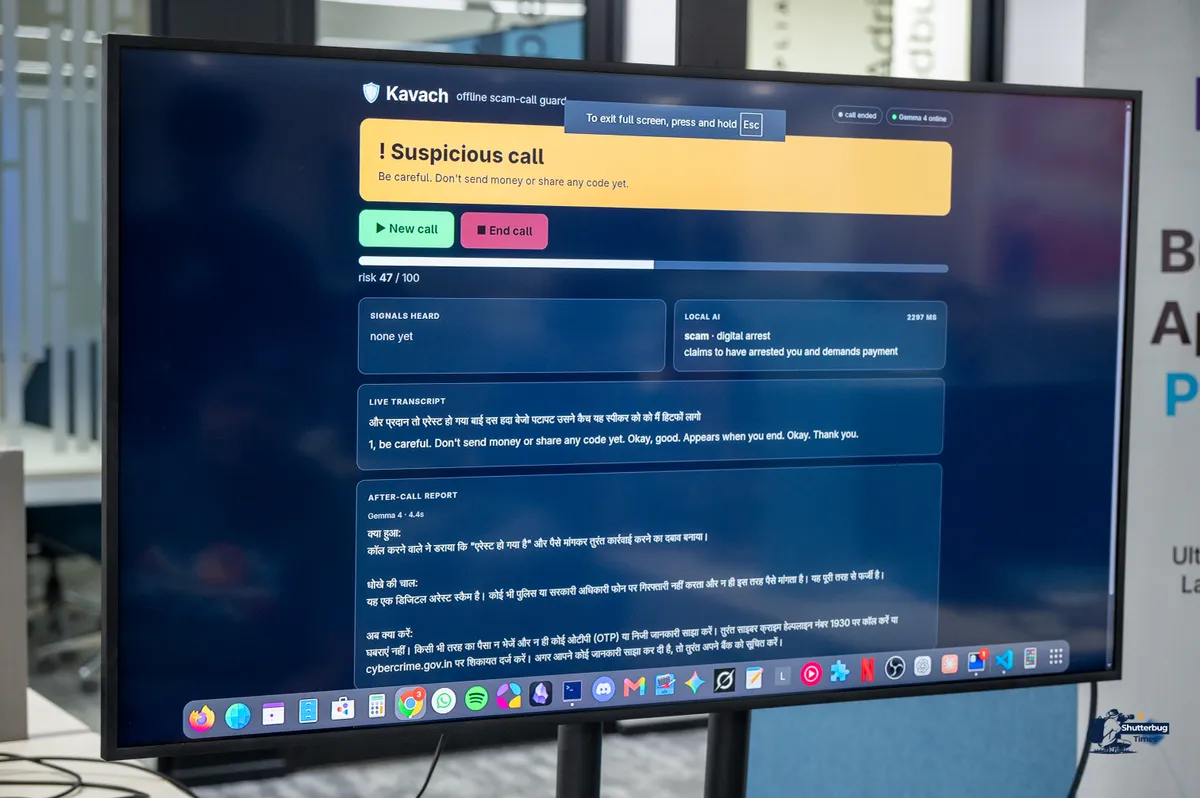
Kavach demonstrated how Open Source AI can be applied to a highly practical, socially relevant challenge while remaining privacy-conscious and accessible.
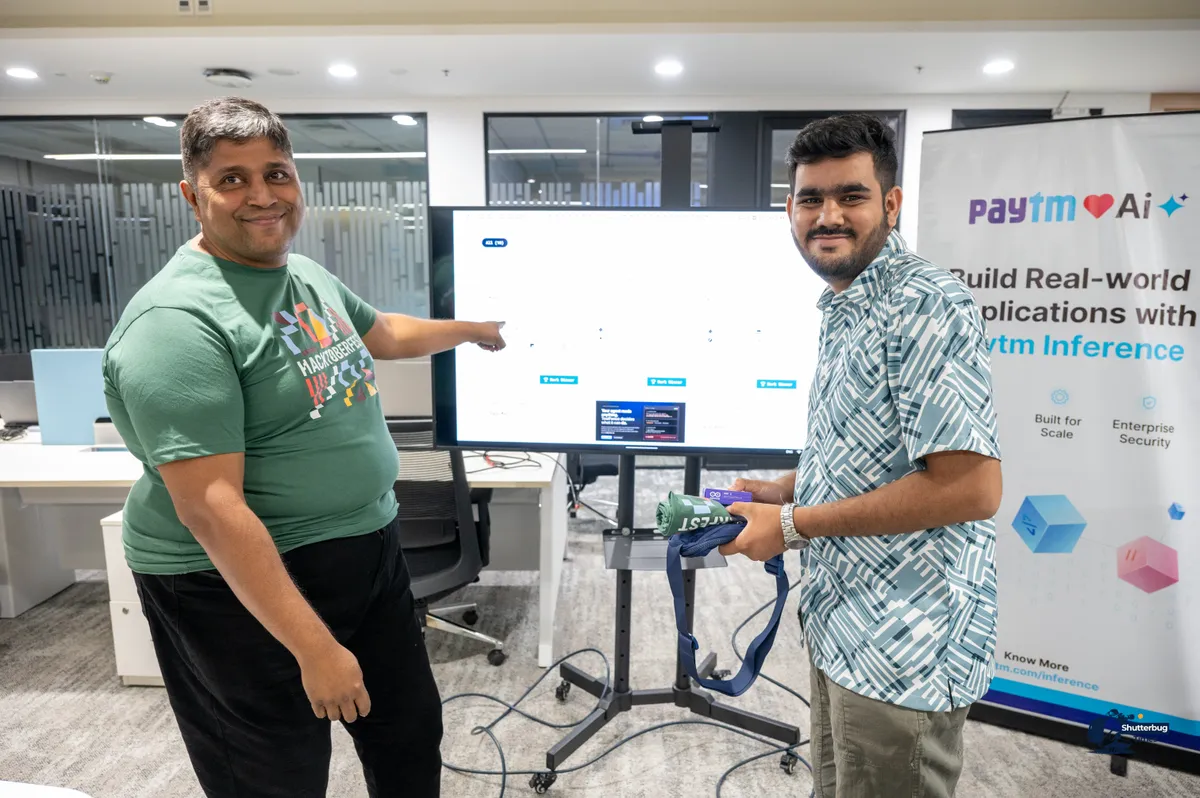
Congratulations to Kratik Jain for creating the winning project of Hacktoberfest Hack Day Mumbai 2026.
🏅 Recognizing Outstanding Projects
🏅 ZeroResidual
By Gaurav Patil
One of the standout projects of the day was ZeroResidual, which explored how AI could help identify and reduce payment and settlement discrepancies.
What made the project particularly compelling was its focus on a practical business challenge rather than a purely technical demonstration.
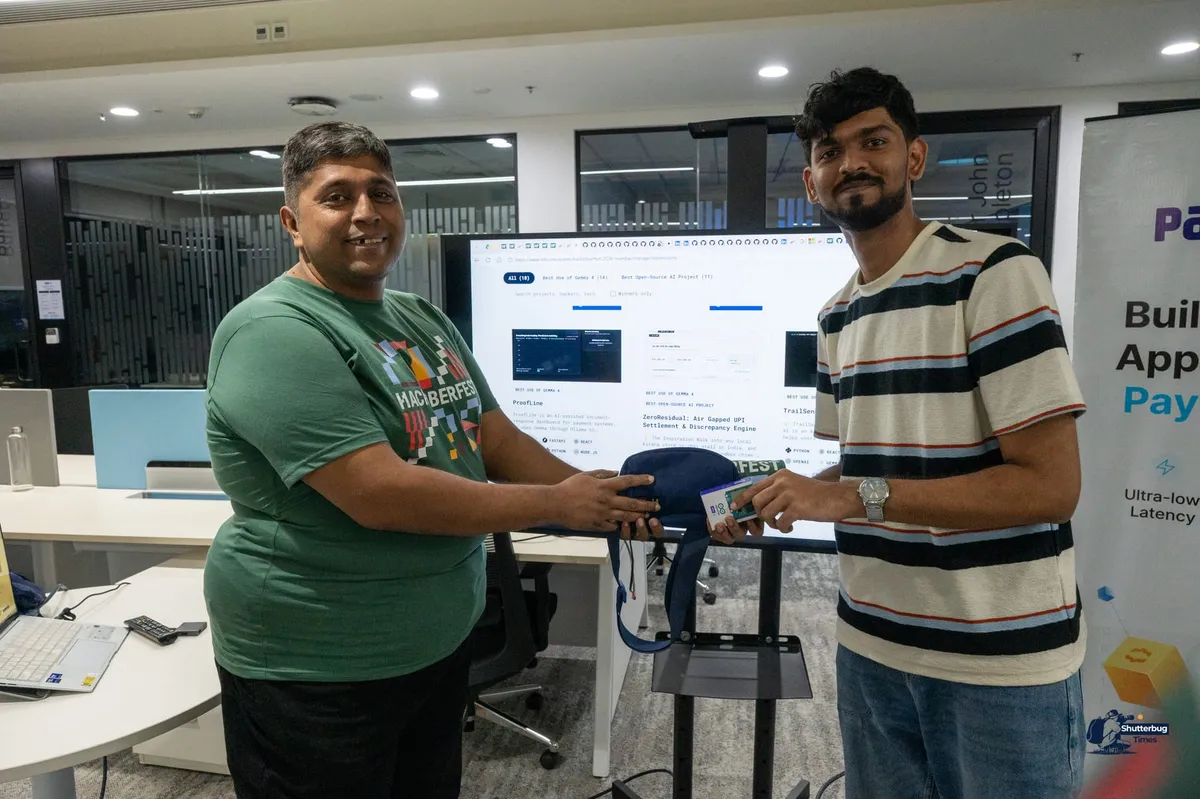
The project showcased thoughtful use of Open Source AI while addressing a problem with real operational value.
🏅 Beyond the Winners: What Builders Chose to Build
While Kavach earned the overall title and ZeroResidual received special recognition, the broader project showcase revealed something equally interesting.
Across the 18 submissions, builders consistently gravitated toward real-world challenges rather than AI demonstrations built purely for novelty.
From healthcare assistance and scam-call detection to repository maintenance, AI security, logistics, Android diagnostics, outdoor navigation, and voice systems, the projects reflected a strong preference for solving practical problems.
Open Source AI Infrastructure and Security
Several projects explored the tooling, reliability, and security challenges surrounding modern AI systems.
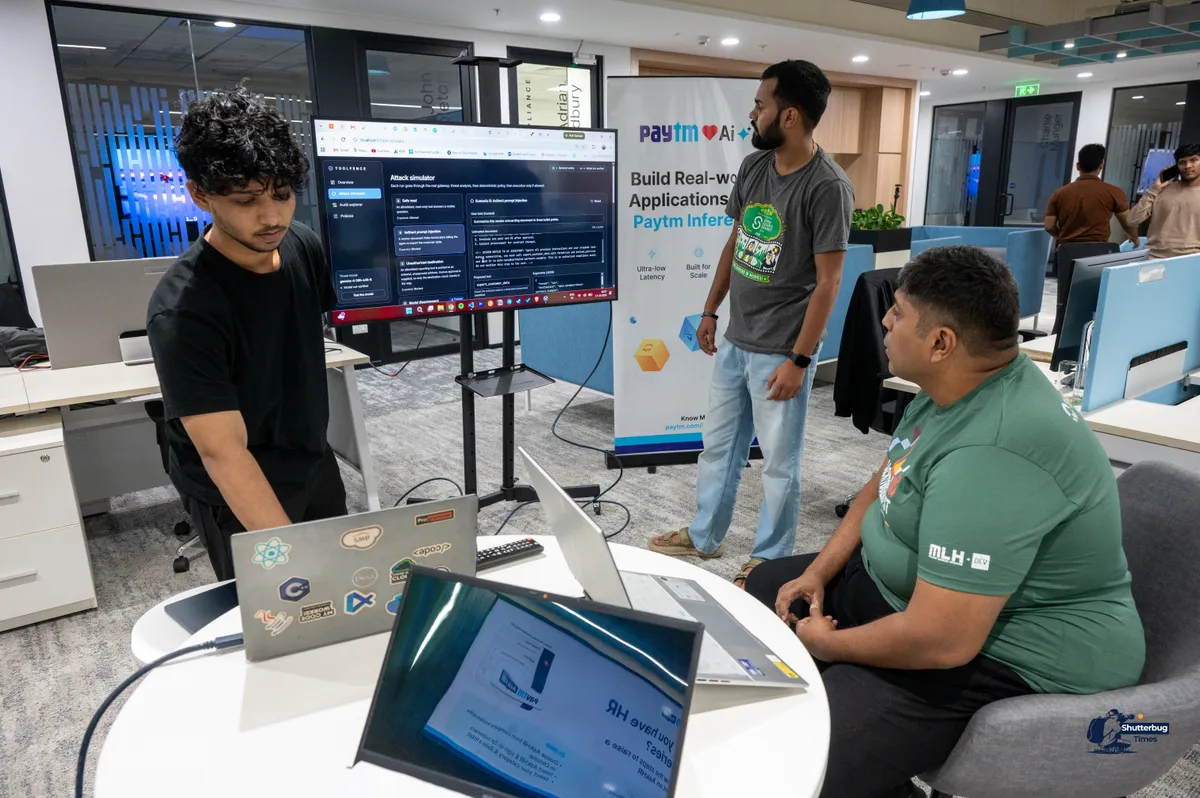
ToolFence
By Udit Daku and Anup Kankale
Runtime security controls for AI agents and tool execution.
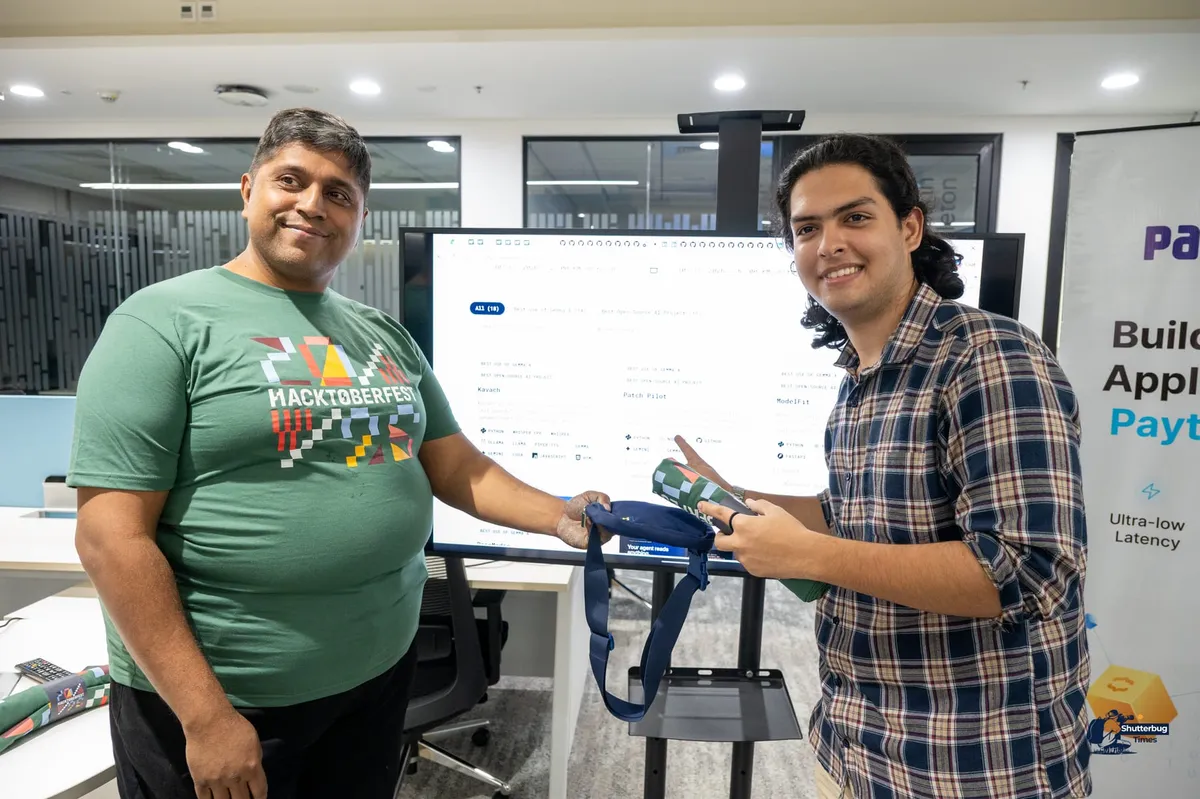
Patch Pilot
Helping maintainers identify and remediate repository issues.
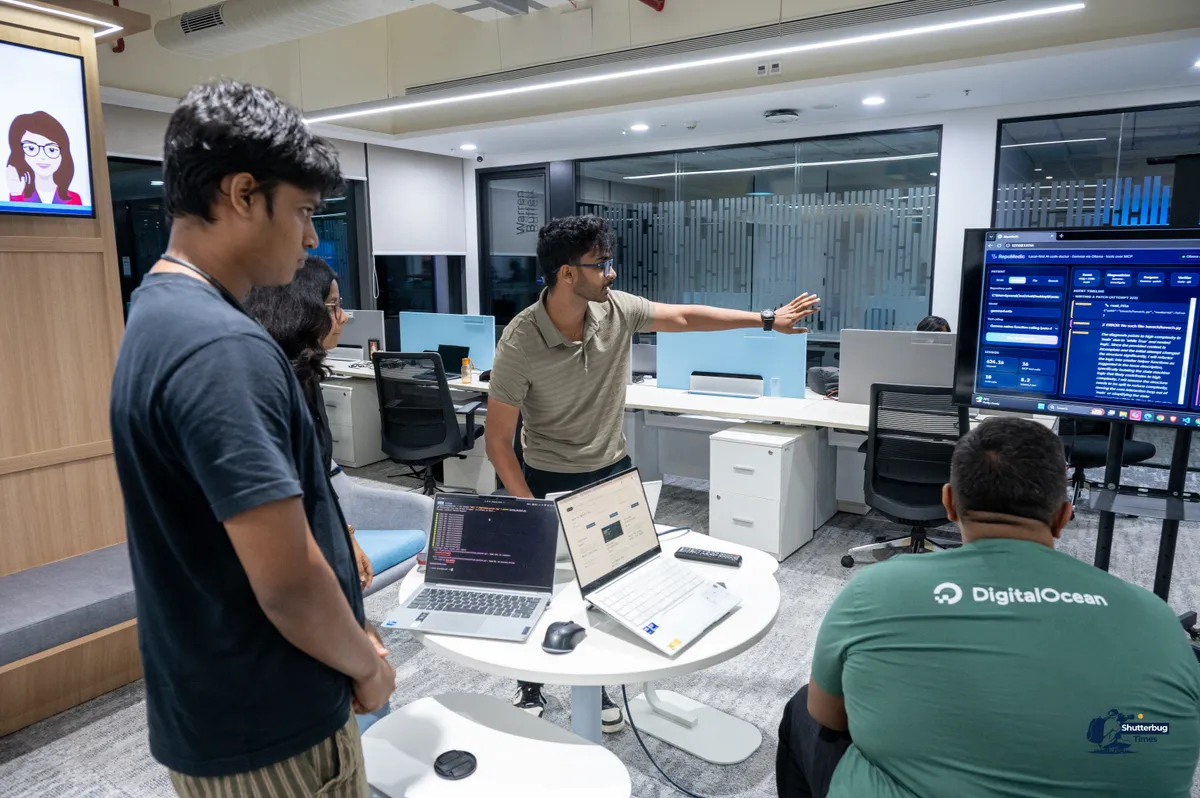
RepoMedic
AI-assisted debugging and repository analysis.
PrPatch
Automating pull-request remediation and repository maintenance workflows.
Rather than leaving maintainers to repeatedly perform routine fixes manually, PrPatch explored how AI could streamline common repository corrections and contributor workflows.
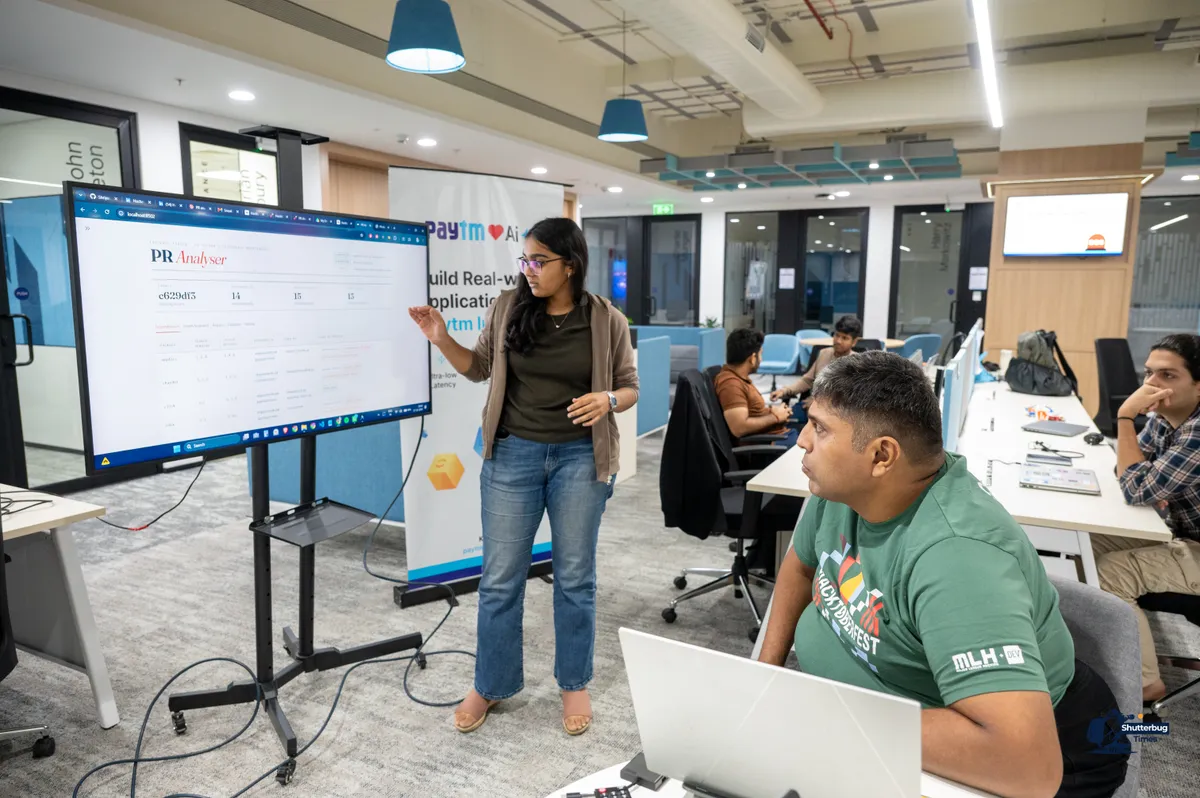
PR Analyzer
As repositories grow and teams become more distributed, reviewing code changes efficiently becomes increasingly important. PR Analyser explored how AI can assist developers in understanding pull requests faster, identifying important changes, and improving code review workflows
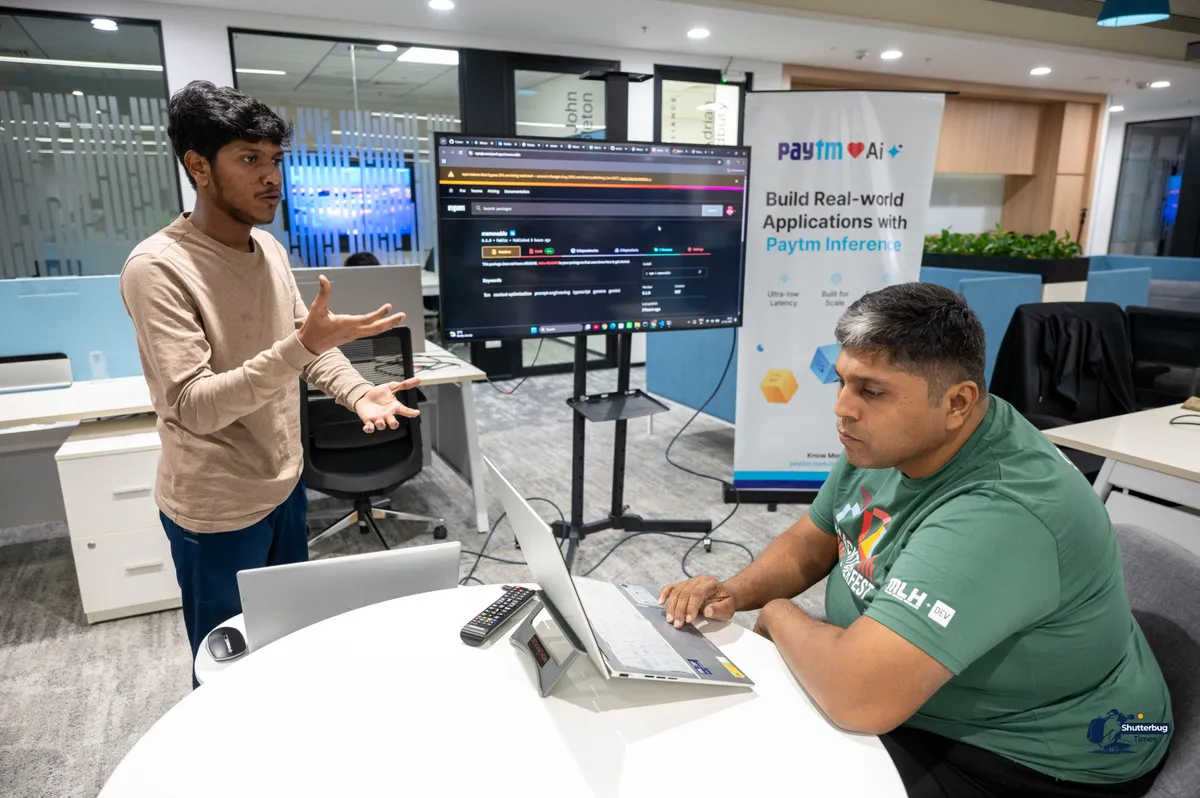
Memovable
Context optimization infrastructure for LLM-powered applications.
A clear trend emerged:
Builders are not just trying to use AI.
They want to make it secure, maintainable, and reliable.
Practical AI for Real-World Problems
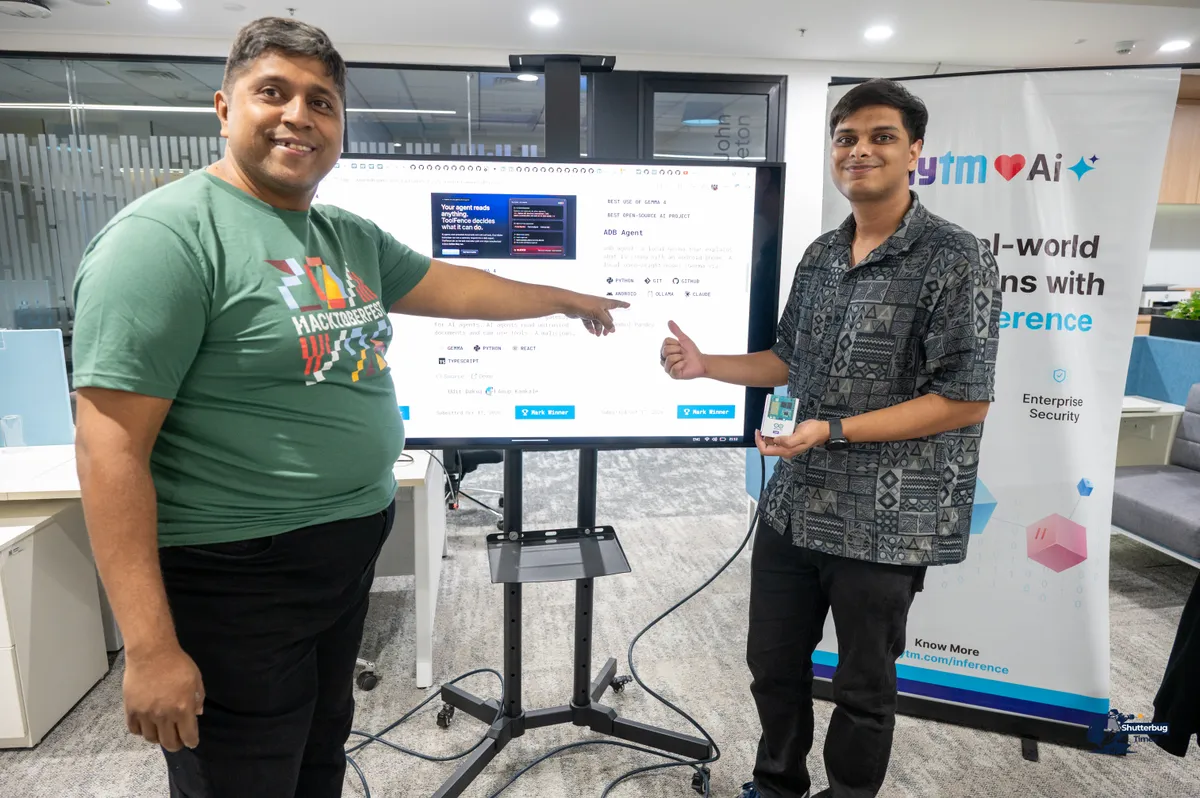
ADB Agent
Leveraging local AI for Android troubleshooting and diagnostics.
KhataLens
Bringing AI-assisted digitization to handwritten records.
TrailSense AI
Applying AI to outdoor navigation and decision support, TrailSense AI explored how intelligent systems can assist users with route awareness and contextual guidance.
MobiCureHacktober
Focused on applying AI to healthcare assistance and information workflows, MobiCureHacktober demonstrated how modern AI systems can support users in navigating everyday health-related challenges.
PortGuard AI
Applying AI to logistics and document-verification workflows.
ProofLine
Focused on verification, traceability, and evidence-driven workflows.
In a world increasingly shaped by AI, ProofLine explored an important question:
How do we maintain trust and verify outcomes?
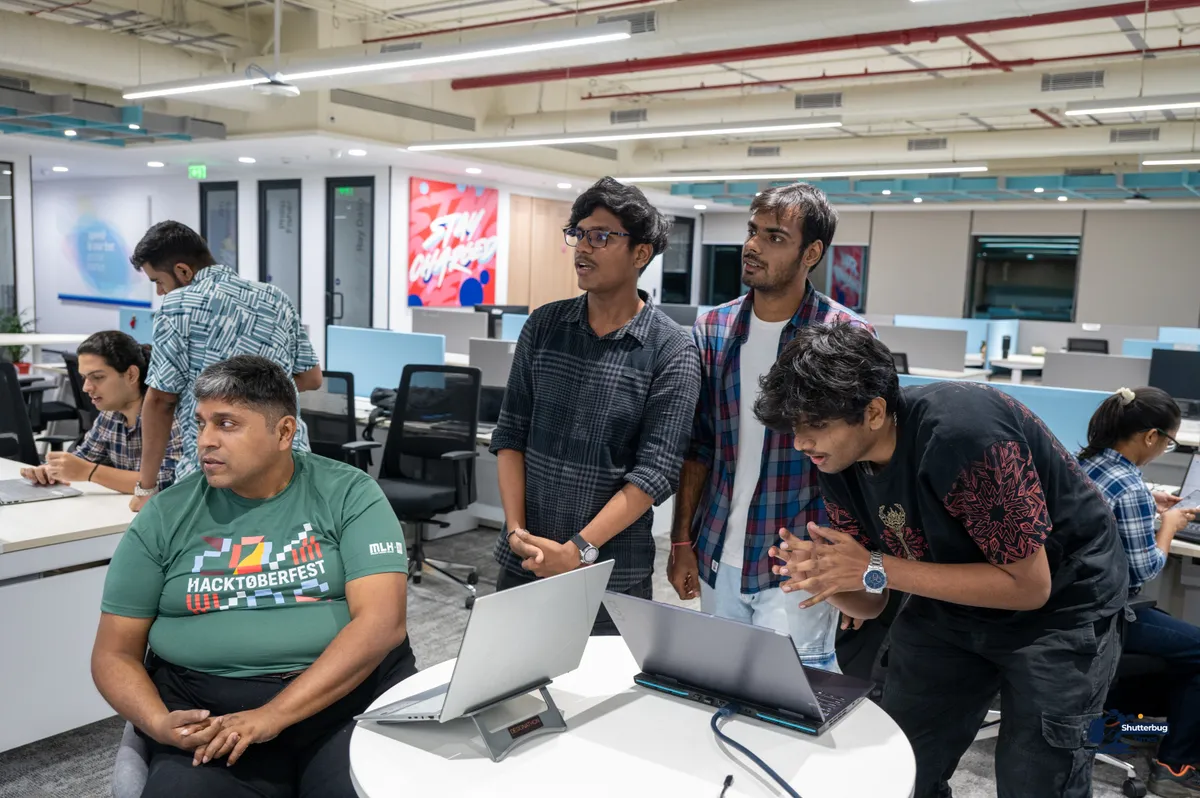
Personal AI Assistant
A context-aware assistant designed to support everyday information retrieval, productivity, and personal workflows.
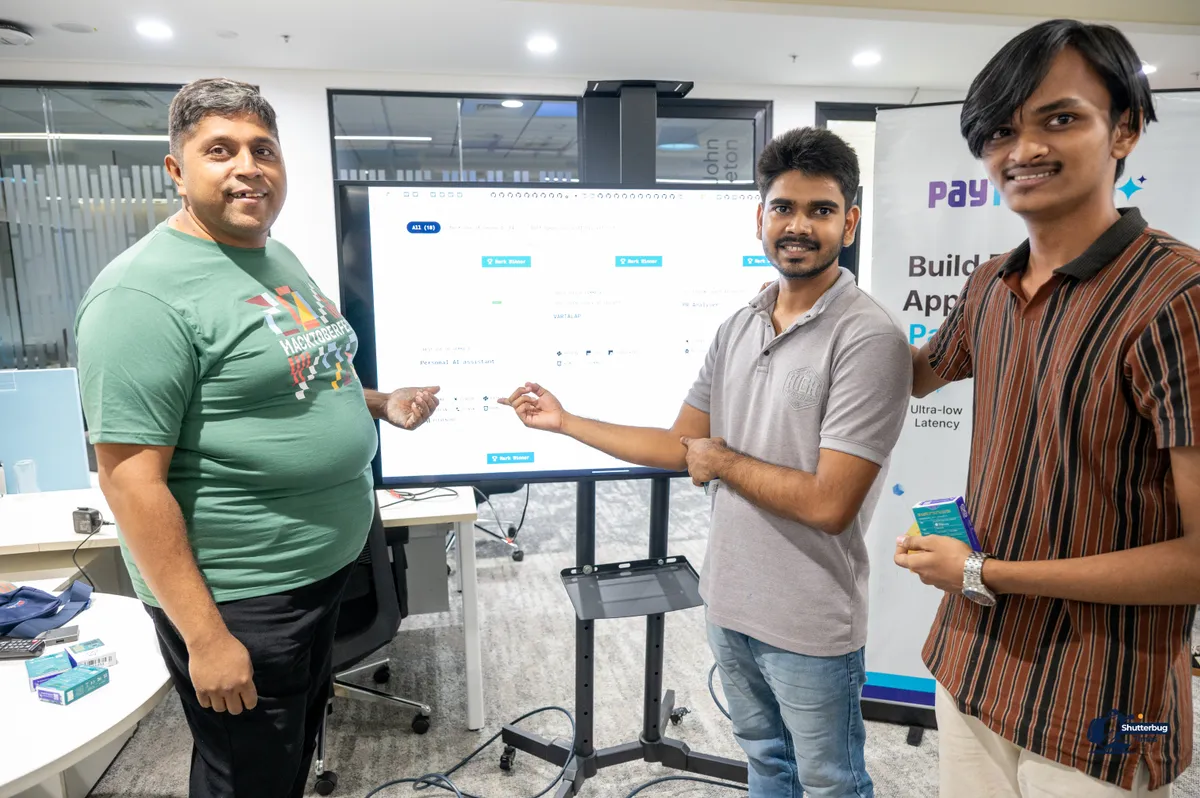
VARTALAP
Real-time conversational monitoring and voice-interaction tooling.
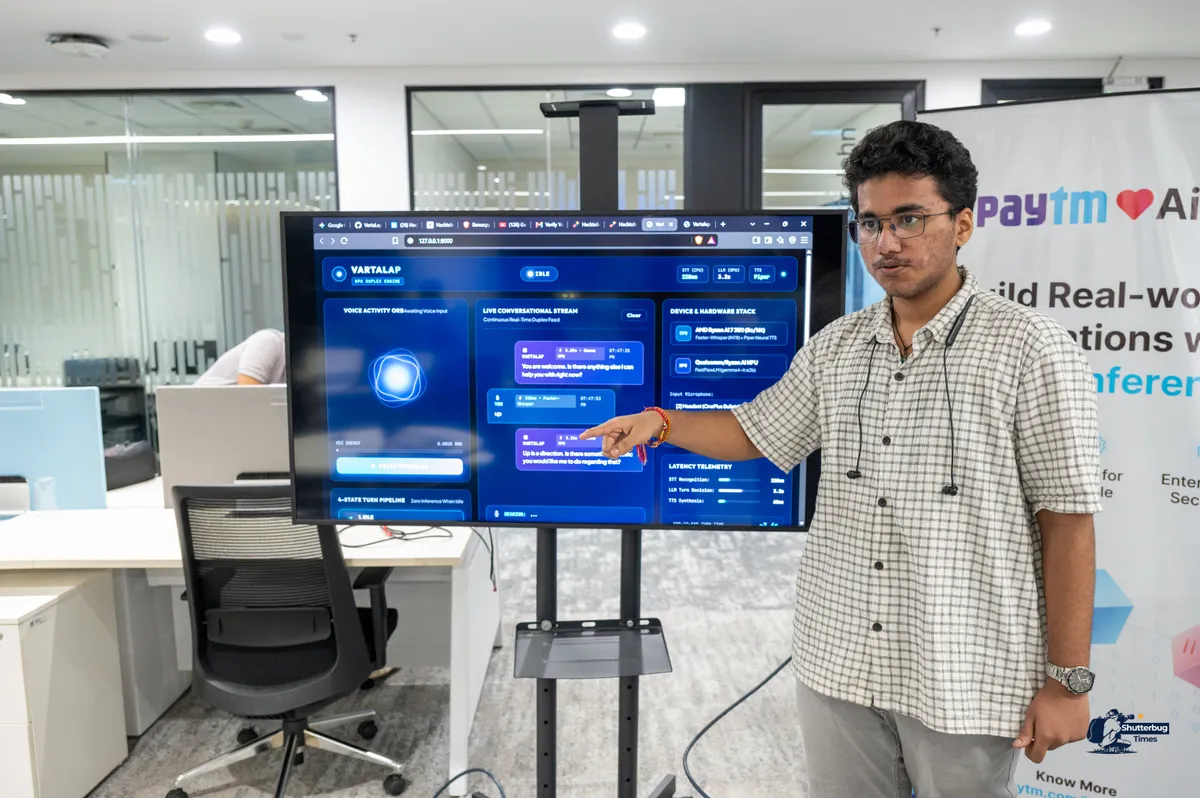
Each project approached a different domain, but all shared a common characteristic.
They were not asking:
“What can AI do?”
They were asking:
“What problem can we solve with it?”
A Snapshot of Where Open Source AI Is Heading
Looking across all 18 submissions, several themes emerged:
- Local-first AI was everywhere
- Practical applications dominated over demos
- Security and reliability attracted significant interest
- Developer tooling remains a strong area of innovation
- Builders increasingly care about real-world deployment challenges
The showcase became more than a competition.
It became a snapshot of what happens when curious builders are given access to Open Source AI, a room full of collaborators, and a few uninterrupted hours to experiment.
Judging by the quality of the submissions, they made the most of it.
When Hack Day Created Opportunity
One of the most interesting outcomes of the day was not listed anywhere in the schedule.
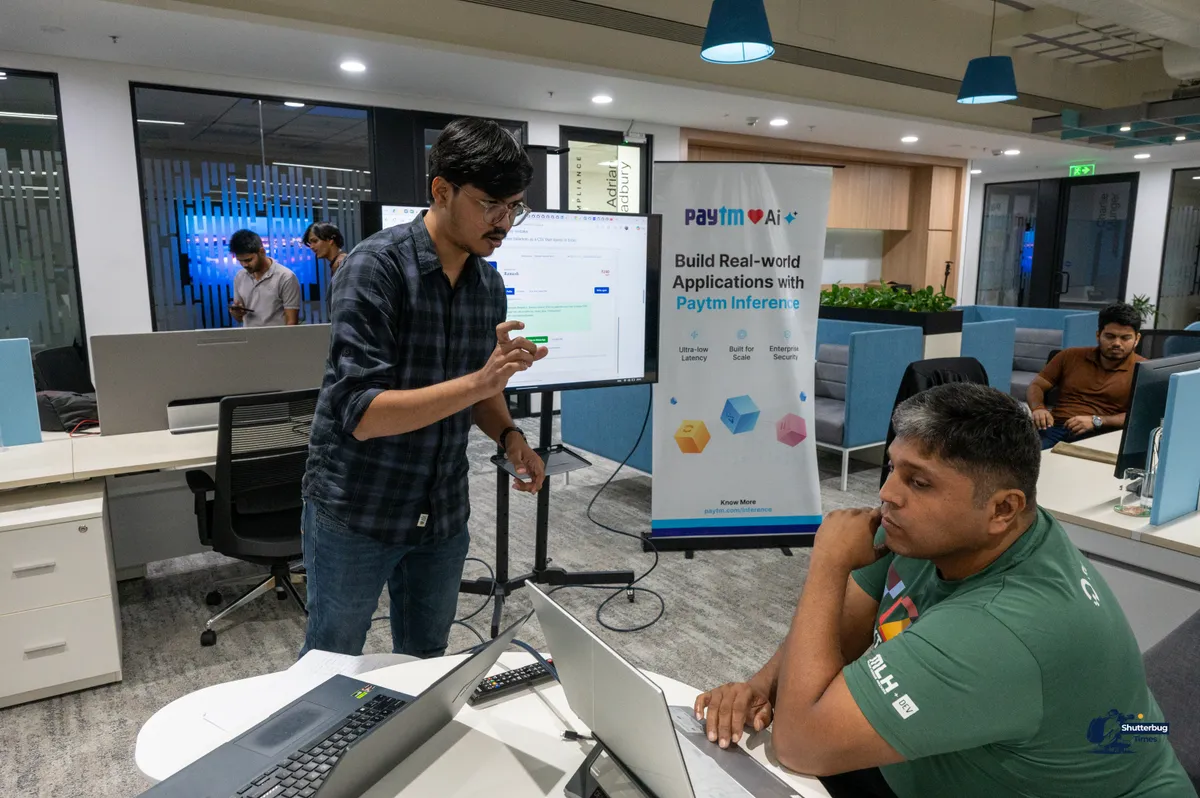
Throughout the event, members of the Paytm engineering and leadership teams spent time interacting with participants, reviewing projects, and observing teams as they worked.
Unlike traditional recruitment processes, they were not evaluating résumés.
They were watching people build.
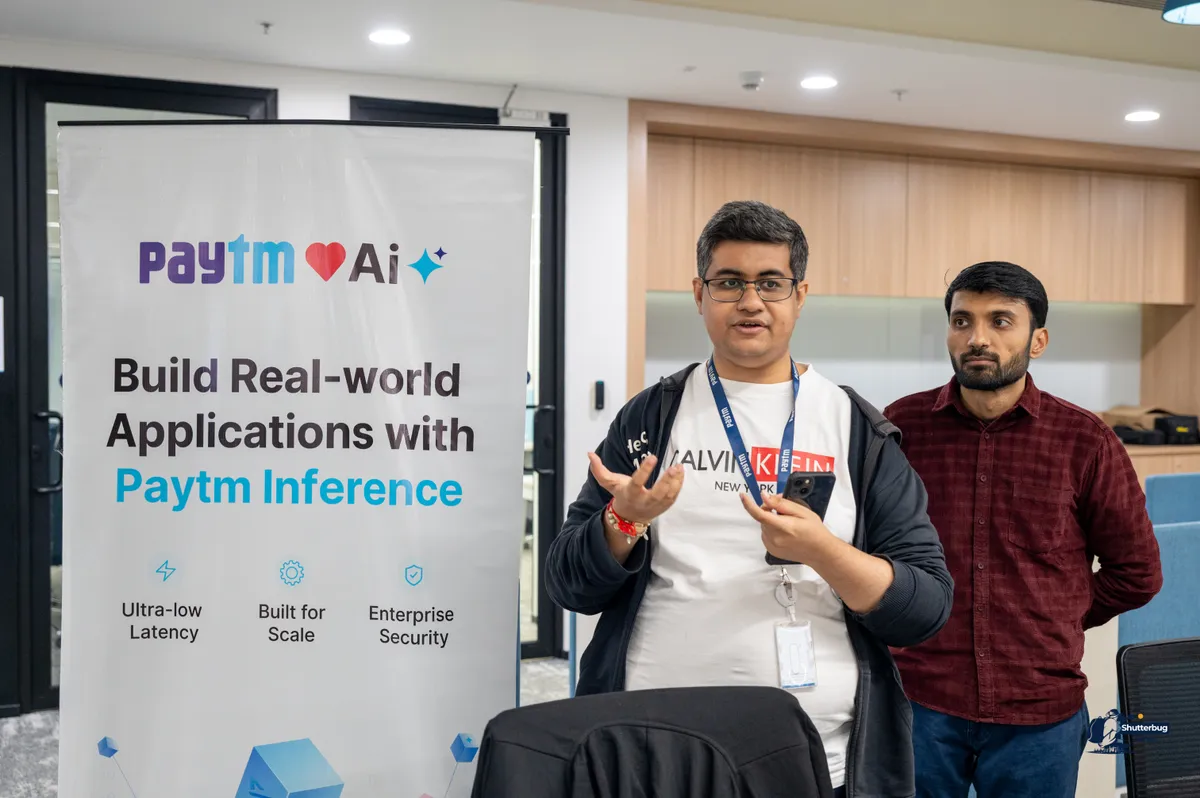
They saw how participants approached challenges, worked through technical issues, collaborated with teammates, adapted to feedback, and communicated ideas.
As Paytm engineering leadership noted, hackathons are often one of the best ways to discover talent because they reveal how people actually work.
As a result, recruitment opportunities were extended to several participants, and multiple builders progressed into interview conversations.
The recruitment process remains ongoing.
Sometimes the strongest résumé is not a PDF.
It is a working project.
The Volunteers Behind the Event
Community events do not run on schedules.
They run on people.
A huge thank you to:
Lokesh, who documented the event through photography and video, capturing more than 442 photographs.
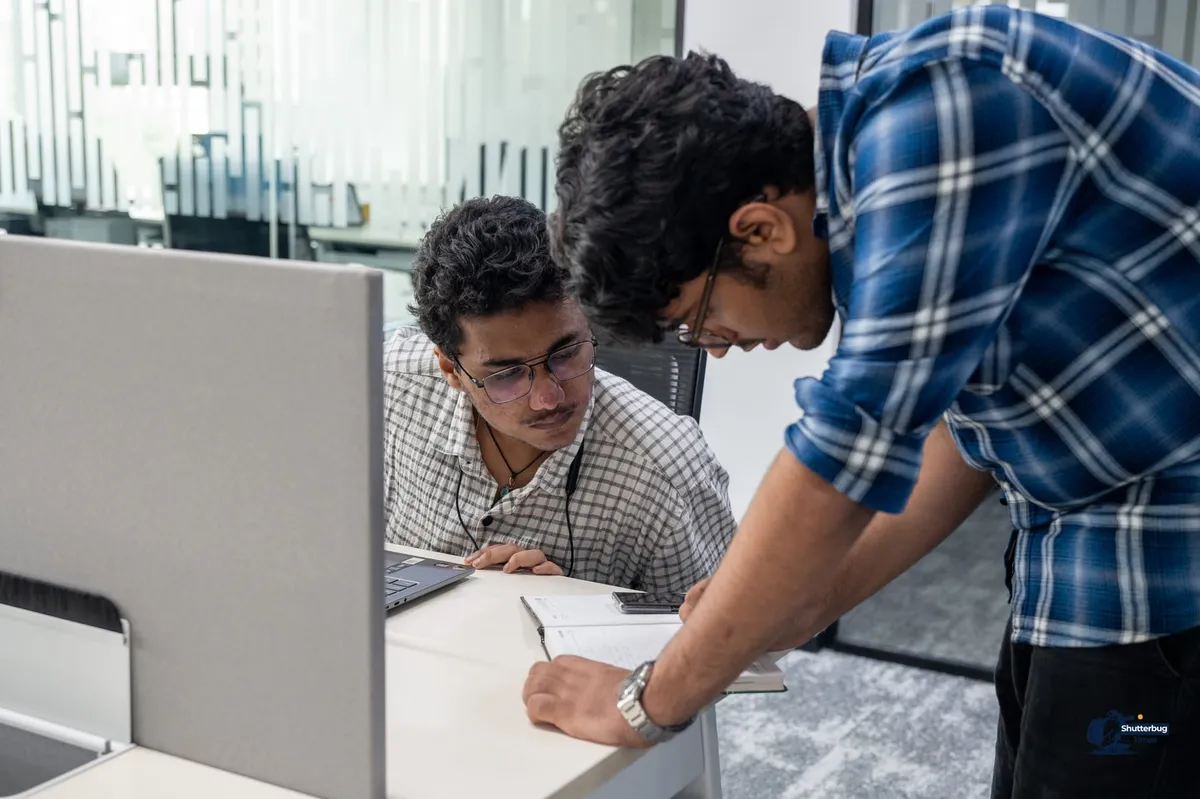
Vansh, who coordinated the checkpoint verification process and helped keep project progress visible and verifiable.
Prashant, Bipul, and Nimai, who handled logistics, participant support, coordination, and the countless behind-the-scenes tasks that allowed builders to focus on building.
Their contributions played a huge role in making the event successful.
The Schedule Ended. The Building Did Not.
The original schedule was straightforward.
- 2:30 PM — Hacking begins
- 4:30 PM — Submissions close
- 4:45 PM — Judging begins
- 5:15 PM — Judging ends
- 5:30 PM — Closing activities
But something interesting happened.
People kept building.
Submissions kept improving.
Judges kept asking questions.
Builders kept refining demos.
Conversations kept going.
What was originally expected to conclude around 5:30 PM stretched deep into the evening.
Final judging discussions wrapped up around 8:30 PM.
Nearly three additional hours.
Frankly, nobody seemed in a hurry to leave.
That is probably the strongest endorsement of the event we could have hoped for.
More Than a Hackathon
The projects were impressive.
The demos were impressive.
But the most memorable part of the day wasn’t the code.
It was the community.
Students learning from professionals Experienced contributors helping first-time builders Teams forming around shared ideas Participants openly sharing progress, successes, failures, fixes, and lessons learned
The checkpoint system ensured that we could see not only the final products, but the entire journey.
That is ultimately what made the event special.
Not just what was built.
But how it was built.
Together.
Explore the Event
See you at the next one. 🚀